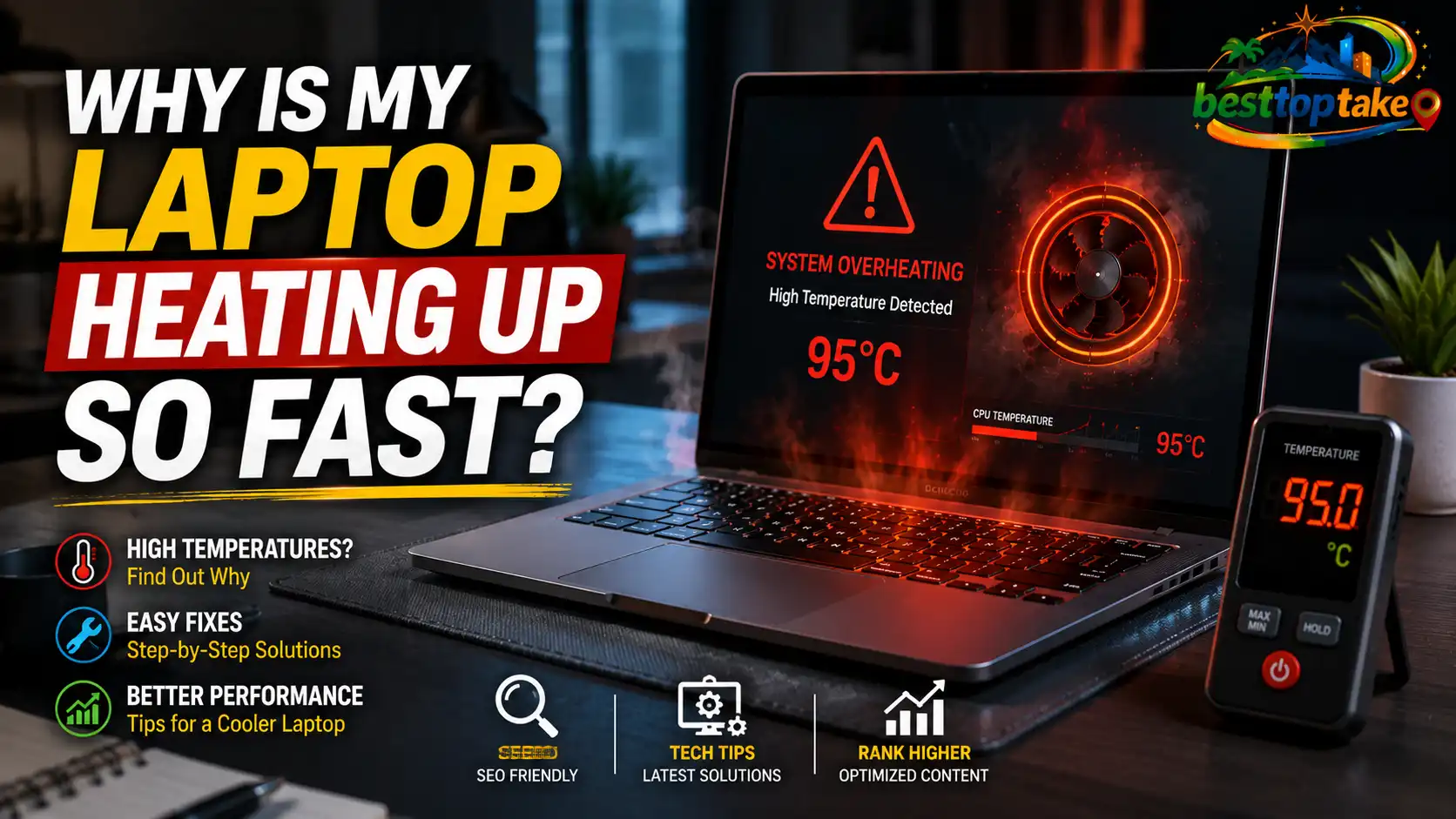
If your laptop is heating up fast, the most common causes are blocked airflow, heavy background apps, dust buildup, outdated software, or failing cooling hardware. I’ll show you how to find the real problem and fix it before heat damages your laptop or slows it down.
If your laptop feels hot within minutes, starts lagging, or sounds like a jet engine, you’re not alone. I’ve worked with overheating laptops for more than 10 years, and I’ve seen the same problems appear again and again from clogged fans to hidden apps draining the CPU.
The good news is that most overheating issues can be fixed at home without spending hundreds of dollars. In this guide, I’ll explain why your laptop heats up so fast, how to cool it down safely, and what you can do to prevent future problems.
Pain Points & Solutions
1. My Laptop Gets Hot Even During Simple Tasks
Why This Happens
This usually means background apps or startup programs are overworking the CPU. Even web browsers with many tabs can push laptop temperatures higher than normal.
Step-by-Step Solution
- Press Ctrl + Shift + Esc to open Task Manager.
- Check which apps use the most CPU or memory.
- Close unused browser tabs and apps.
- Disable unnecessary startup programs.
- Restart your laptop at least once every few days.
Pro Tip: Chrome extensions and video calls often increase laptop temperature faster than people expect.
2. The Fan Is Loud and Hot Air Keeps Blowing Out
Why This Happens
Dust blocks airflow inside the cooling vents. The fan then spins harder to remove heat but cannot cool the laptop properly.
Step-by-Step Solution
- Shut down the laptop completely.
- Unplug the charger.
- Use compressed air to clean the vents.
- Keep the laptop on a hard, flat surface.
- Avoid using it on beds, couches, or blankets.
According to Intel Support, blocked airflow is one of the leading causes of laptop overheating.
3. My Laptop Overheats While Gaming or Editing Videos
Why This Happens
Gaming, video editing, and graphic design apps use both the CPU and GPU heavily. Thin laptops especially struggle to remove heat fast enough.
Step-by-Step Solution
- Lower game graphics settings.
- Plug in the charger while gaming.
- Use a cooling pad.
- Update graphics drivers.
- Limit background apps before launching games.
Common Reasons Your Laptop Heats Up Fast
Poor Ventilation
Laptop cooling systems need steady airflow. If vents are blocked, heat stays trapped inside.
Signs of Poor Ventilation
- Hot keyboard surface
- Loud fan noise
- Sudden slowdowns
- Random shutdowns
Dust Inside the Laptop
Dust acts like a blanket over the fan and heatsink. Over time, even a thin layer can reduce cooling performance.
How Often Should You Clean It?
| Laptop Usage | Cleaning Frequency |
|---|---|
| Casual use | Every 6–12 months |
| Gaming or editing | Every 3–6 months |
| Dusty environments | Every 3 months |
Too Many Background Processes
Many laptops run dozens of apps silently in the background.
Apps That Often Cause Heat
- Web browsers with many tabs
- Antivirus scans
- Cloud sync apps
- Streaming software
- Video conferencing apps
“Heat is the enemy of electronics.” — Gordon Moore, Co-founder of Intel
That quote still applies today. Constant high heat shortens laptop lifespan and reduces battery health.
Old Thermal Paste
Thermal paste transfers heat from the processor to the cooling system. Over time, it dries out and becomes less effective.
Signs Thermal Paste May Be Failing
- Laptop overheats quickly after startup
- Fan runs constantly
- Temperatures stay high even after cleaning
Replacing thermal paste can lower temperatures by several degrees if done correctly.
“Keeping systems cool improves long-term reliability.” — Lisa Su, CEO of AMD
Malware or Hidden Software
Sometimes overheating has nothing to do with hardware. Malware can secretly use CPU resources in the background.
What You Should Do
- Run a full antivirus scan
- Remove suspicious apps
- Update Windows or macOS
- Avoid downloading cracked software
Warning Signs Your Laptop Is Overheating
Here are the most common symptoms I see:
| Symptom | What It Usually Means |
|---|---|
| Loud fans | Cooling system under stress |
| Slow performance | CPU throttling بسبب heat |
| Blue screen crashes | System instability |
| Hot bottom panel | Poor airflow |
| Battery draining fast | Heat affecting battery efficiency |
“Excess heat and high voltage can both reduce the lifespan of semiconductors.” — Dr. Andy Grove, Former CEO of Intel
How I Cool Down an Overheating Laptop Fast
Move to a Cooler Surface
Always place the laptop on a desk or cooling stand.
Reduce Screen Brightness
Lower brightness slightly to reduce power usage and heat.
Close Heavy Programs
Video editing, gaming, and streaming apps increase processor load.
Update Drivers
Outdated drivers sometimes cause fans to behave incorrectly.
Use Battery Saver Mode
Power-saving settings reduce CPU speed and temperature.
Pro Tip: A laptop cooling pad can reduce surface temperatures noticeably during gaming or long work sessions.
Should You Worry About Laptop Heat?
A warm laptop is normal. A burning-hot laptop is not.
Most laptops safely operate between:
- 40°C–60°C during light tasks
- 70°C–85°C during gaming or heavy workloads
If temperatures stay above 90°C often, you should take action immediately.
When You Need Professional Repair
- Fan stops spinning
- Laptop shuts down randomly
- Burning smell appears
- Battery swelling is visible
- Overheating continues after cleaning
Best Habits to Prevent Laptop Overheating
Keep Air Vents Clear
Never block the bottom vents with soft surfaces.
Restart Regularly
Many people leave laptops running for weeks. A restart clears memory and background processes.
Update Your System
Software updates often improve thermal management.
Avoid Cheap Chargers
Low-quality chargers may increase battery heat and power instability.
Monitor Temperatures
Apps like HWMonitor or Core Temp help track laptop temperatures safely.
Pro Tip: If you work long hours, using an external keyboard can help reduce direct heat exposure to your hands.
FAQ
Why is my laptop heating up so fast all of a sudden?
Sudden overheating often happens because of dust buildup, background apps, malware, or failing cooling fans. Software updates or driver issues can also increase CPU usage unexpectedly.
Is it bad if my laptop gets hot while charging?
Some warmth during charging is normal, especially with fast chargers. Excessive heat, though, may point to battery issues, poor airflow, or heavy app usage during charging.
Can overheating damage my laptop?
Yes. Constant overheating can damage the CPU, battery, motherboard, and storage drive over time. It may also shorten overall laptop lifespan significantly.
How do I check my laptop temperature?
You can use monitoring software like HWMonitor, Core Temp, or MSI Afterburner. These tools show real-time CPU and GPU temperatures.
Why does my laptop overheat while gaming?
Gaming pushes both the processor and graphics card hard. High graphics settings, blocked vents, and poor cooling systems make temperatures rise quickly.
Conclusion
If you’ve been asking yourself, “Why is my laptop heating up so fast?” the answer usually comes down to airflow problems, dust, heavy apps, or aging hardware. The good news is that most overheating problems can be fixed without replacing the laptop.
The three biggest takeaways are:
- Keep vents and fans clean.
- Reduce unnecessary background activity.
- Monitor temperatures before damage happens.
I always tell people that a cooler laptop usually runs faster, quieter, and lasts longer. Have you noticed your laptop overheating during certain tasks, or does it happen all the time?

“Electronics aren’t just gadgets. They’re the invisible threads that connect our work, our play, and our world.”
I’m Julian Reed, and my obsession with tech started at age twelve, when I soldered a defunct gaming console back to life in my bedroom. That tiny green screen taught me that technology isn’t just a black box, it’s a tool you can master.
After fifteen years as a hardware engineer and a decade reviewing consumer tech, I’ve joined this team to cut through the jargon. Whether you’re building a high-end home theater or just need a laptop that won’t lag, I’m here to help you choose the gear that truly powers your life.