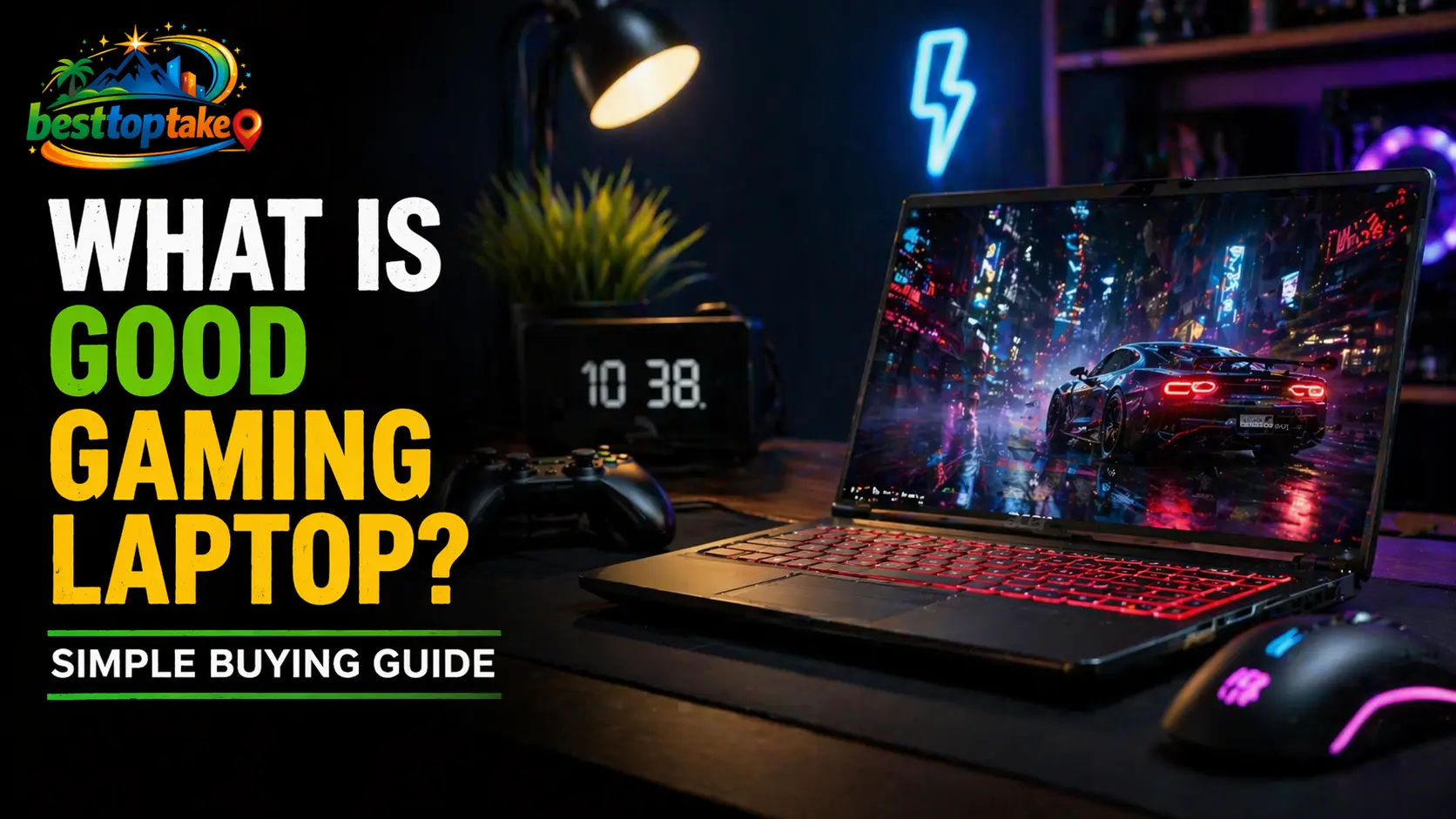
A good gaming laptop is one that delivers smooth performance, strong graphics, and reliable cooling without overheating. It should match your gaming needs, budget, and future upgrades.
Buying a gaming laptop can feel confusing. Specs look complicated, prices vary a lot, and it’s hard to know what actually matters.
I’ve helped many people choose the right laptops over the years, and I’ve seen the same mistakes again and again. In this guide, I’ll break down what a good gaming laptop really is, what to look for, and how to avoid wasting money.
Pain Points & Solutions
1. Problem: Too Many Specs, No Clear Direction
Why it happens:
Brands throw around terms like RTX, refresh rate, and CPU cores, which can overwhelm buyers.
Solution (Step-by-step):
- Focus on GPU first (graphics card)
- Choose a mid-to-high CPU
- Ensure at least 16GB RAM
- Check storage (SSD only)
2. Problem: Buying Too Cheap (or Too Expensive)
Why it happens:
People either try to save too much or overspend on features they don’t need.
Solution:
- Decide what games you play
- Match specs to those games
- Set a realistic budget ($800–$2000 in US markets)
- Avoid paying extra for brand name alone
3. Problem: Overheating and Poor Performance
Why it happens:
Thin laptops often struggle with heat management.
Solution:
- Look for dual-fan cooling systems
- Check reviews for thermal performance
- Avoid ultra-thin models for heavy gaming
- Use a cooling pad if needed
What Is Good Gaming Laptop? (Core Features Explained)
1. Graphics Card (GPU) — The Most Important Part
The GPU decides how well your games run.
- Entry-level: RTX 3050 (basic gaming)
- Mid-range: RTX 4060 (most gamers)
- High-end: RTX 4070+ (4K or ultra settings)
Pro Tip:
Always choose a better GPU over a slightly better CPU. It impacts gaming far more.
2. Processor (CPU) — Smooth Gameplay Support
A good CPU prevents lag and bottlenecks.
- Intel Core i5 / AMD Ryzen 5 → good
- Intel Core i7 / Ryzen 7 → ideal
“The GPU is the most critical component for gaming performance, but a balanced CPU ensures stability.” — Mark Hachman, Senior Editor at PCWorld
3. RAM — Multitasking and Speed
- Minimum: 16GB
- Ideal: 32GB for future-proofing
More RAM means smoother gameplay and better multitasking.
4. Storage — Speed Matters
Always choose SSD over HDD.
- 512GB SSD → minimum
- 1TB SSD → recommended
Fast storage reduces loading times significantly.
5. Display — Visual Experience
Key factors:
- 1080p or 1440p resolution
- 120Hz–165Hz refresh rate
- IPS panel for better colors
“A higher refresh rate display can significantly improve gaming responsiveness and player experience.” — Dr. Ian Cutress, CPU & hardware analyst
Gaming Laptop Checklist
| Feature | Minimum Requirement | Ideal Setup |
|---|---|---|
| GPU | RTX 3050 | RTX 4060+ |
| CPU | i5 / Ryzen 5 | i7 / Ryzen 7 |
| RAM | 16GB | 32GB |
| Storage | 512GB SSD | 1TB SSD |
| Display | 60Hz | 144Hz+ |
Real Performance Matters More Than Specs
Many people focus only on numbers, but real-world performance is key.
Before buying:
- Watch gameplay benchmarks
- Read user reviews
- Check thermal tests
For trusted benchmarks, I recommend reviewing data from sources like reviews
This helps you compare real GPU performance.
Pro Tip:
Don’t trust marketing alone. Always verify with real performance tests.
Battery Life vs Performance
Gaming laptops are not built for long battery life.
- Expect 3–6 hours for normal use
- Less than 2 hours while gaming
“Gaming laptops prioritize performance over battery life, and that trade-off is unavoidable.” — Jarred Walton, Senior Editor at Tom’s Hardware
Pro Tip:
Keep your laptop plugged in while gaming for best performance.
Build Quality and Cooling
A good gaming laptop must handle heat well.
Look for:
- Metal chassis
- Large vents
- Multiple heat pipes
Avoid:
- Cheap plastic builds
- Very thin gaming laptops
Should You Buy Now or Wait?
This depends on your needs.
Buy now if:
- Your current system struggles
- You found a good deal
Wait if:
- New GPUs are launching soon
- You don’t urgently need an upgrade
Common Mistakes to Avoid
- Ignoring GPU performance
- Buying 8GB RAM laptops
- Choosing style over cooling
- Not checking upgrade options
FAQ
What is a good gaming laptop for beginners?
A good beginner gaming laptop has an RTX 3050 or 4060, 16GB RAM, and an SSD. It should run popular games smoothly without lag.
How much should I spend on a gaming laptop?
Most people should spend between $900 and $1500. This range offers solid performance without overpaying.
Is 16GB RAM enough for gaming?
Yes, 16GB is enough for most games today. If you plan to multitask or future-proof, consider 32GB.
How long does a good gaming laptop last?
A good gaming laptop lasts around 4–6 years with proper care. Performance may drop for newer games over time.
Are gaming laptops worth it compared to desktops?
Gaming laptops are worth it if you need portability. Desktops offer better performance for the same price but are not portable.
Conclusion
A good gaming laptop is all about balance. Focus on:
- Strong GPU for smooth gameplay
- Enough RAM and fast storage
- Proper cooling and build quality
If you keep these three things in mind, you’ll avoid most common mistakes.
I always say this: the best gaming laptop is the one that fits your needs—not just the most expensive one.
What kind of games do you plan to play on your next laptop?

“Electronics aren’t just gadgets. They’re the invisible threads that connect our work, our play, and our world.”
I’m Julian Reed, and my obsession with tech started at age twelve, when I soldered a defunct gaming console back to life in my bedroom. That tiny green screen taught me that technology isn’t just a black box, it’s a tool you can master.
After fifteen years as a hardware engineer and a decade reviewing consumer tech, I’ve joined this team to cut through the jargon. Whether you’re building a high-end home theater or just need a laptop that won’t lag, I’m here to help you choose the gear that truly powers your life.